
Overview/Mission
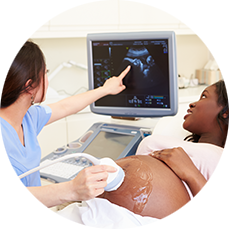
PPB’s goals are to improve the health of women before, during, and after pregnancy; increase infant survival; and ensure the long-term health of mothers and children. Specifically, the branch supports research to understand fetal development and improve ways to diagnose, treat, and prevent diseases during pregnancy and in newborns.
As the focal point for NICHD extramural research and training in maternal-fetal medicine, neonatology, and related fields, branch staff also engage with and support investigators to identify knowledge gaps and opportunities for scientific advancement.
Highlights
- Road to Prevention of Stillbirth Requests for Applications (RFAs). NIH has published two RFAs to fund research centers and a data coordinating center that will form an integrated and collaborative Stillbirth Research Consortium. This consortium will support stillbirth-relevant basic, translational, clinical, and/or data sciences research across the United States, with a particular emphasis on ways to decrease the incidence of stillbirth in vulnerable populations.
- RFA-HD-25-010: Road to Prevention of Stillbirth – Clinical Research Centers (UG1 Clinical Trial Optional)
- RFA-HD-25-011: The Road to Prevention of Stillbirth – Data Coordinating Center (UM2 Clinical Trial Not Allowed)
- The Road to Prevention of Stillbirth Frequently Asked Questions
- News Release: Single-dose antibiotic prevents maternal sepsis and death. Results of an NIH-funded study of the antibiotic azithromycin suggest a potential approach to reduce maternal mortality in low- and middle-income countries.
- News Release: NIH announces winners of data challenge to identify risk factors for first-time pregnancies. Awarded projects of the Decoding Maternal Morbidity Data Challenge seek to reduce pregnancy complications and prevent maternal deaths.
- PPB leads and participates in NICHD’s activities related to COVID-19, especially as it relates to COVID-19 during pregnancy and postpartum.
- HPP Research Showcase: Read about the tools and tests researchers are designing to revolutionize our understanding of the human placenta and to enable the development of safe, noninvasive, real-time assessment of human placenta development and function across pregnancy.
- PPB-supported researchers developed and recently updated a tool using data from the Neonatal Research Network that shows outcome trends for infants born at extremely preterm gestations. To access the tool and learn about the data, visit the Extremely Preterm Birth Outcomes Tool webpage.
 BACK TO TOP