
NIH Websites Are Changing

NIH is moving the launch of its new website to the fall to ensure the best possible experience for everyone who relies on our websites for health information, research, funding opportunities, and other resources.

Developmental Biology and Congenital Anomalies Branch (DBCAB)

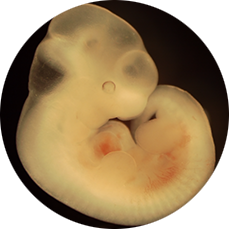
Embryo

Overview/Mission

DBCAB focuses on deciphering the biological causes of structural congenital anomalies. Understanding the etiology of these differences in embryonic development provides the most promising route for improving prevention, diagnosis, and implementation of evidence-based treatments for patients and families affected by these rare diseases and conditions.

In addition to studies focused on identifying and elucidating the roles of gene variants and other factors causing structural congenital anomalies, DBCAB supports studies to advance our understanding of the fundamental processes underlying development of the embryo. This foundational knowledge is crucial for understanding how the process of embryogenesis can go awry.

Major program areas for the branch include early embryonic development, biophysics and biomechanics of development, developmental neurobiology, organogenesis, stem cells and regeneration, systems developmental biology, and developmental genetics and genomics, including genomic analysis of individuals affected by human structural congenital anomalies. The branch also administers the Gabriella Miller Kids First Pediatric Research Program, led by DPCPSI and the NIH Common Fund.

  • Biophysics/Biomechanics of Development: Examines how biophysical forces and mechano-transduction contribute to morphogenetic events regulating embryonic development and patterning
  • Developmental Genetics and Genomics: Identifies and characterizes the genes, genetic networks, and epigenetic factors that control developmental processes to understand how disruptions to these processes lead to structural congenital anomalies
  • Developmental Neurobiology: Examines mechanisms that control the early pattern of the developing nervous system, neurogenesis, differentiation, axonal guidance, neural crest differentiation and migration, and neural tube formation and defects
  • Early Embryonic Development: Seeks to explain the cellular and molecular mechanisms directing the zygote to establish the embryonic plan for developing a complex, multicellular organism
  • Organogenesis: Studies mechanisms underlying typical development of tissues and organs
  • Regenerative Biology: Examines key biological events underlying tissue regeneration
  • Stem Cell Biology: Promotes research on stem cell biology essential for creating therapeutic opportunities
  • Systems Developmental Biology: Integrates molecular, cellular, biophysical, and biochemical data into interconnected networks analyzed through computational and quantitative models
  • Structural Congenital Anomalies: Seeks to identify and characterize mechanisms underlying structural congenital anomalies and to promote collaborations between basic, translational, and clinical researchers
  • Gabriella Miller Kids First Pediatric Research Program (Kids First): NIH-wide program supported through DPCPSI and the NIH Common Fund and administered by NICHD in collaboration with NCI, NHLBI, and NHGRI. Kids First fosters collaborative research to uncover the causes of childhood cancers and congenital anomalies and support data sharing with the pediatric research community
    • Kids First Data Resource Portal : An interoperable data resource that enables cloud-based access, discovery, and analysis of whole genome sequences to accelerate collaborative pediatric research leading to improved prevention, diagnosis, and treatments for patients and their families with congenital anomalies or childhood cancers
  • DBCAB also funds community resources for animal model systems, research tool development, and training to facilitate the efforts of developmental biology researchers

  • Maranke I. Koster, Ph.D., Branch Chief
    Main Research Areas: Congenital anomalies; stem cell biology; lineage differentiation; developmental biology
  • Joy Elimimian, M.S., Program Analyst
  • Marcia Fournier, Ph.D., Program Officer, Kids First Working Group Co-Coordinator
    Main Research Areas: Gabriella Miller Kids First Pediatric Research Program, Structural congenital anomalies; biotechnology; precision medicine; small business awards (SBIR/STTR)
  • Mahua Mukhopadhyay, Ph.D., Program Officer
    Main Research Areas: Early embryonic development from implantation through somitogenesis; developmental energy metabolism and metabolomics; developmental biophysics and biomechanics; stem cell biology; regeneration biology
  • Katie Stein, Ph.D., Program Officer
    Main Research Areas: Developmental genetics and genomics; systems development biology; organogenesis; developmental neurobiology

Highlights

  • Science Update: Cellular metabolism regulates developmental rates, suggests NIIH-funded study
    The study findings also suggest the potential to manipulate developmental rates at the cellular level.
  • Media Advisory: NIH-funded scientists generate a mouse embryo model that develops neural tubes
    These embryoids offer a promising model system for research into factors affecting mammalian embryonic development and disease.
  • Some recent findings from DBCAB-supported researchers include the following:
    • The Gene Ontology knowledgebase in 2023. This comprehensive resource concerning the functions of genes and gene products (proteins and noncoding RNAs) covers organisms and viruses and includes three components: a computational knowledge structure describing functional characteristics, annotations, and mechanistic models of molecular pathways. (PMID: 36866529)
    • Reconstruction and deconstruction of human somitogenesis in vitro. This research demonstrates that major patterning modules involved in somitogenesis, including the clock and wavefront, anteroposterior polarity patterning and somite epithelialization, can be dissociated and operate independently within in vitro systems. (PMID: 36543321)
    • Evolutionary divergent mTOR remodels translatome for tissue regeneration. Rapid activation of protein synthesis during injury response plays a crucial role in axolotl limb regeneration. The mTORC1 pathway is a key signal that mediates tissue regeneration and translational control in axolotls. An axolotl mTOR protein was engineered in human cells, inducing a state supporting rapid protein activation. This study provides another missing link in our understanding of vertebrate regenerative potential. (PMID: 37495694)