
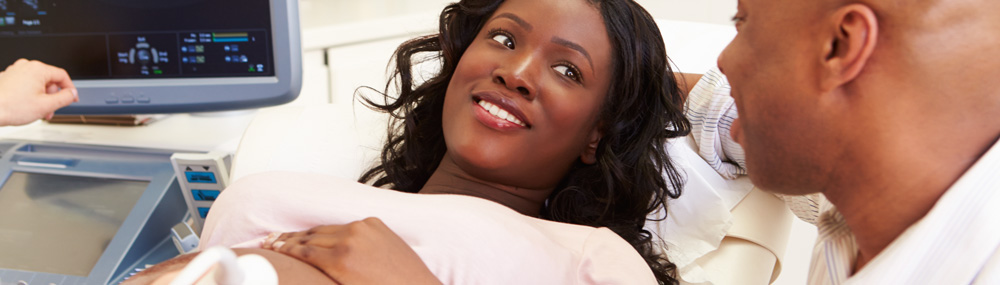
For women who are thinking about getting pregnant, following a health care provider's advice can reduce the risk of problems during pregnancy and after birth. A health care provider can recommend ways to get the proper nutrition and avoid habits that can have lasting harmful effects on a fetus.
For example, taking a supplement containing at least 400 micrograms of folic acid before getting pregnant can reduce the risk of complications such as neural tube defects (NTDs)—abnormalities that can occur in the brain, spine, or spinal column of a developing fetus and are present at birth.1,2
A pre-pregnancy care visit with your health care provider can improve the chances of a healthy pregnancy. A health care provider will likely recommend that you do the following:
Citations
- NICHD.(2010). Healthy native babies: Workbook and toolkit. Retrieved May 23, 2012, from http://www1.nichd.nih.gov/publications/pubs/Documents/ healthy_native_babies_workbook.pdf (PDF 3.59 MB)
- Centers for Disease Control and Prevention. (2006). A report of the CDC/ATSDR Preconception Care Work Group and the Select Panel on Preconception Care. Retrieved May 18, 2012, from http://www.cdc.gov/mmwr/preview/mmwrhtml/rr5506a1.htm
- Zhang, C., Liu, S., Solomon, C. G., & Hu, F. B. (2006). Dietary fiber intake, dietary glycemic load, and the risk for gestational diabetes mellitus. Diabetes Care, 29(10), 2223–2230. Retrieved August 26, 2016, from http://www.ncbi.nlm.nih.gov/pubmed/17003297
- Chen, L.,Hu, F. B., Yeung, E., Willett, W., & Zhang, C. (2009). Prospective study of pre-gravid sugar-sweetened beverage consumption and the risk of gestational diabetes mellitus. Diabetes Care, 32(12), 2236–2241. Retrieved August 26, 2016, from http://www.ncbi.nlm.nih.gov/pubmed/19940226
- Zhang, C., Schulze, M. B., Solomon, C. G., & Hu, F. B. (2006). A prospective study of dietary patterns, meat intake and the risk of gestational diabetes mellitus. Diabetologia, 49(11), 2604–2613. Retrieved August 26, 2016, from http://www.ncbi.nlm.nih.gov/pubmed/16957814
- Bao, W., Bowers, K., Tobias, D. K., Hu, F. B., & Zhang, C. (2013). Prepregnancy dietary protein intake, major dietary protein sources, and the risk of gestational diabetes mellitus: A prospective cohort study. Diabetes Care, 36(7), 2001–2008. Retrieved August 26, 2016, from http://www.ncbi.nlm.nih.gov/pubmed/23378620
- Kamen, B. (1997). Folate and antifolate pharmacology. Seminars in Oncology, 24(5 Suppl 18), S18-30–S18-39. PMID: 9420019
- NIH Office of Dietary Supplements. (2016). Dietary supplement fact sheet: Folate.Retrieved July 10, 2012, from http://ods.od.nih.gov/factsheets/Folate-HealthProfessional/
- Centers for Disease Control. (1992). Recommendations for the use of folic acid to reduce the number of cases of spina bifida and other neural tube defects. MMWR Recommendations and Reports,41(No. RR-14), 1–7. PMID: 1522835. Retrieved July 31, 2013, from http://www.cdc.gov/mmwr/preview/mmwrhtml/00019479.htm
- Food and Nutrition Board, Institute of Medicine. (1998). Dietary reference intakes: Thiamin, riboflavin, niacin, vitamin B6, folate, vitamin B12, pantothenic acid, biotin, and choline. Washington, DC: National Academy Press.
- American College of Obstetricians and Gynecologists (ACOG). (2005). The importance of preconception care in the continuum of women's health care [ACOG Committee Opinion].Retrieved April 12, 2012, from https://pubmed.ncbi.nlm.nih.gov/16135611/
- ACOG. (2015). Good health before pregnancy:Preconception care [ACOG FAQ056 Pregnancy]. Retrieved January 5, 2016, from http://www.acog.org/~/media/For%20Patients/faq056.pdf?dmc=1&ts=20130422T1153356227

- MRC Vitamin Study Research Group. (1991). Prevention of neural tube defects: Results of the Medical Research Council Vitamin Study. Lancet, 338(8760), 131–137. PMID: 1677062 and see Centers for Disease Control and Prevention. (2011, February). National Center on Birth Defects and Developmental Disabilities strategic plan 2011–2015. Retrieved June 26, 2012, from https://www.cdc.gov/ncbddd/strategic-plan
- Centers for Disease Control and Prevention. (2015). Preconception care and health care: Planning for pregnancy. Retrieved January 5, 2016, from http://www.cdc.gov/preconception/planning.html
- Pasquali, R., Patton, L., & Gambineri, A. (2007). Obesity and infertility. Current Opinion in Endocrinology, Diabetes and Obesity, 14,482–487. PMID: 17982356
- NIH. (2010). Risk of newborn heart defects increases with maternal obesity [news release]. Retrieved May 19, 2012, from http://www.nichd.nih.gov/news/releases/Pages/ 040710-newborn-heart-defects.aspx
- Womenshealth.gov.(2009). Publications:Depression during and after pregnancy fact sheet. Retrieved June 12, 2012, from http://www.womenshealth.gov/publications/our-publications/fact-sheet/depression-pregnancy.html
- NICHD. (2014). Healthy Pre-Pregnancy Diet and Exercise May Reduce Risk of Gestational Diabetes. Retrieved May 18, 2018, from https://www.nichd.nih.gov/news/resources/spotlight/082114-pregnancy-GDM
 BACK TO TOP