
Basic information for topics such as “What is it?” and “How many people are affected?” is available in the Condition Information section. Frequently Asked Questions (FAQs) that are specific to certain topics are answered in this section.
Currently, there is no cure for Down syndrome. However, researchers are exploring a number of ways to address and correct many aspects of the syndrome.
For example, NICHD researchers have used mouse models to test treatments for preventing the intellectual and developmental disabilities associated with Down syndrome. One study found that mice with Down syndrome who were treated in the womb with specific chemicals had no delay in achieving several developmental milestones.1 Another study found that specific chemicals prevented learning deficits in adult mice who had Down syndrome.2
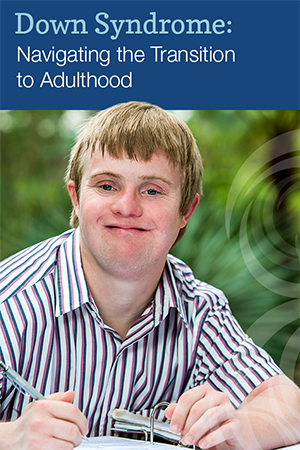
More and more youth and young adults with Down syndrome are achieving some of the same milestones as other young people, such as learning to drive and finishing high school. As they start to live more independently, young people with Down syndrome get jobs, move into group homes or individual housing, or pursue further education, often at community colleges. Families may need to be advocates to ensure that their young adult children don’t fall through the cracks. Sometimes young people with Down syndrome in the midst of these transitions start to do worse in school or undergo major mood changes. In these cases, additional school assistance or evaluation for hypothyroidism or depression may be appropriate.
Many adolescents and adults with Down syndrome find success in jobs. The Americans with Disabilities Act (ADA) makes it illegal for an employer of more than 15 individuals to discriminate against people with disabilities who are qualified to carry out a particular job, and the law requires employers to provide reasonable accommodations. When considering whether their older child with Down syndrome might be ready to look for work, parents should keep several factors in mind: Success depends on a healthy sense of self-esteem, the ability to complete tasks without help, a willingness to separate emotionally from family, and access to personal recreational activities.3 Assistive electronic devices can help, too.
Adolescents often switch from care by a pediatrician to adult care, and this change can be difficult for young people with Down syndrome. Families and young people with Down syndrome often have strong bonds of trust with their pediatricians, and adult health care providers may be poorly prepared to meet the needs of maturing patients with Down syndrome. Individuals who receive care at special Down syndrome clinics that provide lifelong care might prefer to stay with the providers at these clinics as adults.4, 5
Teenagers with Down syndrome undergo hormonal changes like any other teen. Parents should encourage their teenagers with Down syndrome to develop independent skills in hygiene and self-care, be aware of privacy issues, and manage their behavior appropriately. Teenagers with Down syndrome also should be educated about puberty, sexuality, sexual activity, and the consequences of such activity. Males with Down syndrome generally have a reduced sperm count and are usually unable to father children. In contrast, females with Down syndrome have regular menstrual periods and can get pregnant and carry a baby to term. Therefore, health care providers and families should consider having discussions with their teens with Down syndrome about birth control and preventing sexually transmitted diseases (STDs).
The life expectancy for people with Down syndrome has increased substantially in the last few decades, to an average age of 50 years and beyond. In addition to living longer, people with Down syndrome now live fuller, richer lives than ever before as family members and contributors to their community. Many adults with Down syndrome form meaningful relationships and eventually marry. Now that people with Down syndrome are living longer, the needs of adults with Down syndrome are receiving greater attention. With assistance from family and caretakers, many adults with Down syndrome have developed the skills required to hold jobs and to live independently well into later adult life.
Increased life expectancy in individuals with Down syndrome puts them at risk for developing mental health issues, such as depression, as they age. Death of parents, changes in caregivers, and medical issues often contribute to such changes in mental health. Individuals with Down syndrome seem to respond well to treatment with medication, but it is important that they follow instructions for taking these medications closely.6
Premature aging is a characteristic of adults with Down syndrome, as is dementia, memory loss, and impaired judgment similar to that occurring in individuals with Alzheimer’s disease.6 Although much has been learned about Alzheimer’s disease as it affects individuals with Down syndrome, effective treatments and diagnostic tools that can identify early stages of dementia or the symptoms of mild cognitive impairment are still needed. Currently, changes in behavior may be the best indicators of dementia in people with Down syndrome. Families should look for associations between the type of behavior, how often the behavior occurs, when the behavior occurs, and the persistence of specific behaviors as a way to check for dementia and memory loss in a person with Down syndrome.6,7 Family members and caretakers may need to step in if the individual begins to lose the skills required for independent living.
Other medical issues associated with aging in individuals with Down syndrome include high cholesterol (which can be treated with medications), obesity, metabolic syndrome, diabetes, cataracts and other visual problems, and early menopause. In contrast, individuals with Down syndrome appear to be protected from certain diseases that are common in the elderly: They do not develop hardening of the arteries; they have fewer solid tumor cancers (such as breast cancer); and they have low blood pressure.8,9,10,11
Longitudinal studies of aging in Down syndrome (some ongoing for more than 25 years) reveal that healthy aging occurs in most individuals with Down syndrome if they continue to receive routine medical care and attention to their special needs.
 BACK TO TOP