
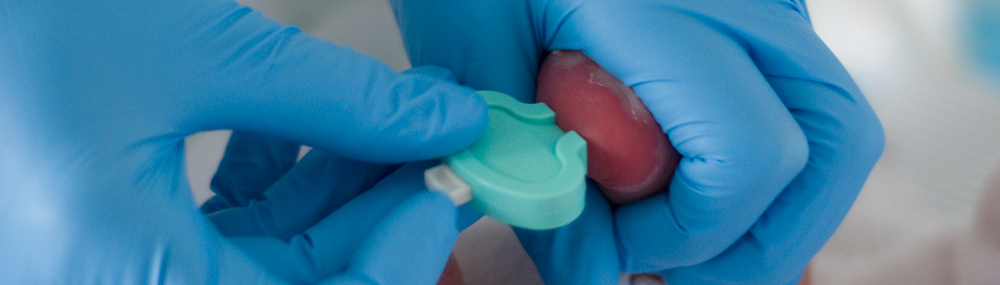
NICHD has been committed to newborn screening research since its earliest days, with the goal of detecting conditions early enough to intervene, preventing symptoms from developing. To achieve this goal, the Institute's research portfolio includes studies to improve existing and develop new screening methods and novel screening technologies, as well as to find innovative therapies for detectable disorders.
Because many of the conditions detected by newborn screening can cause intellectual and developmental disabilities if not treated, much of the Institute’s newborn screening research activities are supported through the Intellectual and Developmental Disabilities Branch (IDDB). These activities include the Hunter Kelly Newborn Screening Research Program, which focuses on:
- Identifying, developing, and testing new newborn screening technologies in order to improve existing tests and develop new tests.
- Developing and testing innovative interventions and treatments for conditions that can be detected through screening but which aren’t yet treatable, and evaluating and improving treatments and strategies for disorders with existing treatments.
For more information on the Hunter Kelly Newborn Screening Research Program, see NICHD Spotlights September Is Newborn Screening Awareness Month and NICHD and Newborn Screening: A New Era.
Other NICHD efforts involve developing newborn screening techniques for specific, often rare disorders. For instance:
- In the Section on Translational Neuroscience in the Division of Intramural Research (DIR), researchers are working to develop rapid and reliable neurochemical and molecular techniques for newborn screening of Menkes disease among infants who are at high risk for the condition. Menkes is an X-linked recessive disorder of copper transport that presents in infancy with delayed development, failure to thrive, neurodegeneration, and premature death. Newborns identified by the screening test begin receiving treatment immediately, before symptoms arise. The combination of screening research and studies of very early treatment for those affected could help reduce or eliminate the effects of the disease. Some of this work is described in Gene replacement treats copper deficiency disorder in mice.
- Also in the DIR, the Section on Molecular Dysmorphology is conducting studies related to newborn screening for Niemann-Pick type C, a childhood neurodegenerative disorder that results in ataxia and dementia. These studies aim to identify a blood-based diagnostic/screening test; biomarkers that can be used as tools to facilitate development and implementation of treatments; and clinical symptoms/signs that may be used as efficacy outcome measures for treatments.
- NIH-funded project leads to FDA-approved newborn screening device
A History of Success
NICHD has been committed to newborn screening research since its earliest days, with notable successes related to severe combined immune deficiency (SCID), phenylketonuria (PKU), and congenital hypothyroidism. Visit Brief History of Newborn Screening to learn more about NICHD’s role in advancing the field.
NICHD is also active in the following activities related to newborn screening:
- NICHD Director Dr. Diana Bianchi is an ex-officio member of the Advisory Committee on Heritable Disorders in Newborns and Children, and several current and former Institute grantees are involved with the committee. Learn more about the committee.
- The Institute works closely with the Centers for Disease Control and Prevention (CDC) and the Health Resources and Services Administration (HRSA) to:
- Provide quality control and improvement materials to ensure accurate tests distributed by CDC to states pilot-testing new screenings.
- Develop clinical decision support tools supported by HRSA (ACTion sheets) to guide infants’ health care providers.
- Expand pilot studies and databases to enable the diagnosis, treatment, and long-term follow-up of SCID cases.
 BACK TO TOP